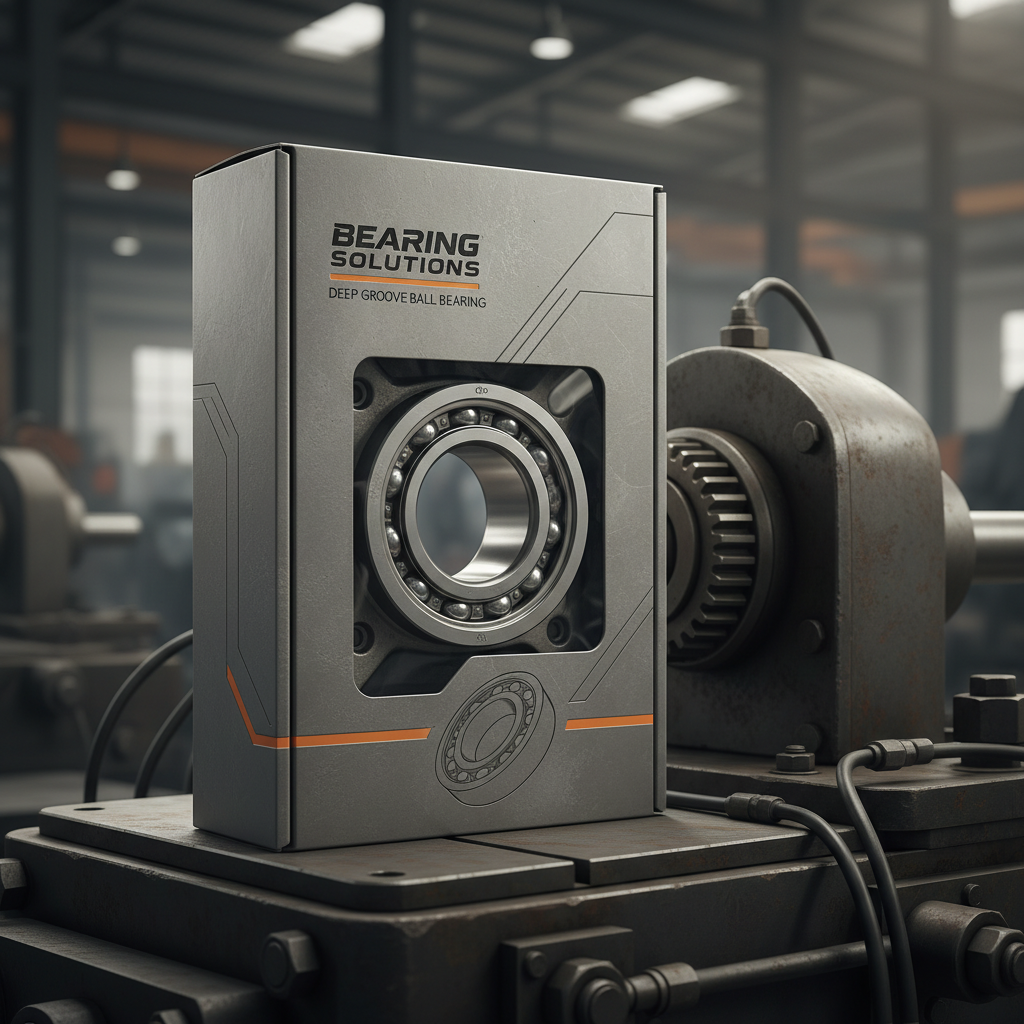
When procurement managers evaluate the 6006 zz bearing price, the primary objective is rarely finding the lowest nominal cost, but rather identifying the optimal balance between initial expenditure and long-term operational reliability. In the heavy-duty environment of the general equipment manufacturing industry, a bearing failure is not merely a component replacement issue; it represents significant unplanned downtime and potential systemic damage. Understanding the variables that drive the cost of shielded deep groove ball bearings is essential for maintaining lean production cycles without compromising machine integrity.
The 6006 ZZ configuration, characterized by its metal shields on both sides, is designed to prevent lubricant leakage and protect the raceways from contaminant ingress. Within the broader ecosystem of Machinery Bearings, including Taper Roller Bearings and Cylindrical Roller Bearings, the 6006 ZZ serves as a versatile workhorse for radial loads. However, the price variance often reflects differences in steel purity, precision grading, and the quality of the shield fit, which directly impact the bearing's service life and energy efficiency.
Navigating the complexities of global sourcing requires a technical approach to pricing. This analysis explores the technical specifications and economic drivers behind 6006 zz bearing price, providing a framework for engineers and buyers to assess quality markers. By aligning procurement strategies with actual application demands, companies can optimize their total cost of ownership while ensuring high-performance rotation in demanding industrial settings.


The 6006 ZZ bearing is a deep groove ball bearing featuring a specific dimensional standard designed for radial load support. The "ZZ" suffix indicates the presence of two metal shields, which are non-contacting seals that provide a physical barrier against large particles while allowing low-friction rotation. This structure is fundamental for applications where lubrication is pre-filled and the environment is moderately dusty, eliminating the need for frequent re-greasing.
From a manufacturing perspective, the precision of the inner and outer rings determines the bearing's ability to maintain concentricity. In the context of general equipment manufacturing, the 6006 ZZ is often selected for its ability to handle high speeds and radial loads simultaneously. The internal clearance and the quality of the ball-raceway contact are the primary technical drivers that separate standard-grade components from high-precision industrial bearings.
Material purity is the first critical factor. High-carbon chromium steel, processed through vacuum degassing, ensures that there are no microscopic inclusions in the steel. These inclusions often become the initiation points for fatigue spalling, which drastically reduces the bearing's operational life. When analyzing pricing, the grade of steel used is a hidden variable that directly correlates with the mean time between failures (MTBF).
The second factor is the lubrication consistency. While the ZZ shields keep grease inside, the type of grease—whether lithium-based or synthetic—determines the bearing's performance under temperature fluctuations. In high-speed machinery, the thermal expansion of the balls can reduce internal clearance, leading to increased friction and heat. Proper lubrication ensures that a hydrodynamic film is maintained, preventing metal-to-metal contact.
Finally, the precision of the shield fit is paramount. A shield that is too loose allows contaminants to enter the raceway, while one that is too tight can cause abnormal friction and heat buildup. Professional manufacturing ensures a calibrated gap that balances protection with efficiency, which is a key marker of quality in industrial-grade bearings.
The real value of a 6006 ZZ bearing is realized through the reduction of maintenance overhead. By utilizing metal shields, the bearing is essentially "lubricated for life" in many standard applications. This reduces the man-hours required for lubrication schedules and prevents the risk of over-greasing, which can lead to seal failure and increased energy consumption due to churning losses.
The core economic advantage lies in the synergy between shielding and load distribution; when high-precision ZZ bearings are used, the reduction in parasitic friction leads to a measurable decrease in motor energy consumption and a significant extension of the machine's service interval.
Furthermore, the durability of the metal shields compared to rubber seals makes them more suitable for environments with higher temperatures or where chemical exposure might degrade elastomers. This versatility ensures that the bearing maintains its integrity across various industrial climates, protecting the internal components from premature wear and reducing the total cost of ownership over the asset's lifecycle.
To understand the positioning of the 6006 ZZ, it is helpful to compare its load-bearing characteristics with other bearing types. While Deep Groove Ball Bearings are optimized for radial loads, Tapered Roller Bearings are superior for combined axial and radial loads. The efficiency of the 6006 ZZ is most evident in high-RPM applications where low torque is required.
When evaluating the relative dynamic load ratings, the 6006 ZZ offers a balanced profile. The following data represents a relative performance index across different bearing configurations for standard industrial radial applications, highlighting where the shielded ball bearing delivers the most efficient trade-off between speed and capacity.
The 6006 ZZ bearing is extensively deployed in electric motors, centrifugal pumps, and conveyor systems. In motor applications, the bearing must support the rotor's weight while resisting the vibrations caused by electromagnetic forces. The ZZ shields are critical here to prevent fine metallic dust from entering the bearing, which would otherwise cause rapid abrasive wear.
In agricultural machinery and greenhouse parts, the bearing often faces a combination of moisture and dust. Although not fully sealed like a 2RS bearing, the ZZ version is preferred in applications where low friction is prioritized over absolute waterproofing. Its ability to operate reliably in these varied environments makes it a staple in the general equipment manufacturing sector.
Modern bearing production has shifted toward automated grinding and honing processes to achieve sub-micron tolerances. The use of CNC grinding for the raceways ensures that the curvature is perfectly spherical, which distributes the load evenly across the ball's contact area. This reduction in stress concentration is what allows modern bearings to exceed previous lifespan benchmarks.
Heat treatment technology has also evolved. Advanced tempering processes now allow for a harder surface (to resist wear) while maintaining a tough core (to resist impact). This duality is essential for bearings used in machinery that may experience sudden load spikes or shocks during operation, preventing the rings from cracking under pressure.
Looking forward, the integration of specialized coatings and the use of higher-grade alloys are likely to further optimize the energy efficiency of these components. As industries move toward carbon neutrality, reducing the frictional torque of a simple bearing becomes a key part of the overall energy-saving strategy for large-scale industrial plants.
Incorrect installation is the leading cause of premature bearing failure. Applying force to the inner ring when pressing the bearing onto the shaft can displace the balls and damage the raceways. Professional installation requires a press tool that applies force only to the ring being fitted, ensuring that the internal geometry remains undisturbed.
Another common challenge is misalignment. Even a slight angular deviation can cause "edge loading," where the load is concentrated on the side of the ball rather than the center. This leads to rapid wear and increased noise. Using a precision shaft and housing ensures that the 6006 ZZ operates within its design parameters.
Finally, monitoring the vibration signature of the bearing can provide an early warning of failure. By analyzing the frequency of the noise, maintenance teams can distinguish between lubrication failure and fatigue spalling, allowing for planned replacements instead of emergency shutdowns.
| Failure Mode | Primary Cause | Prevention Method | Maintenance Action |
|---|---|---|---|
| Abrasive Wear | Contaminant Ingress | Verify ZZ Shield Fit | Inspect Housing Seals |
| Fatigue Spalling | Overloading / Steel Impurity | Use High-Grade Steel | Reduce Load / Replace |
| Thermal Seizure | Lubrication Failure | Correct Grease Volume | Re-lubricate / Cool Down |
| Edge Loading | Shaft Misalignment | Precision Boring | Re-align Shaft/Housing |
| Brinelling | Impact Loading | Install Shock Absorbers | Replace Damaged Unit |
| Corrosion | Humidity / Chemicals | Apply Anti-corrosive Coat | Clean and Re-grease |
The ZZ designation indicates that the bearing is equipped with two metal shields on both sides of the inner ring. Unlike rubber seals, these metal shields do not contact the inner ring, which reduces friction and allows for higher rotational speeds. Their primary purpose is to prevent the pre-filled grease from leaking out and to protect the internal balls and raceways from larger dust particles and contaminants.
Price variance is typically driven by the quality of the raw materials (such as GCr15 steel purity), the precision grade (P0, P6, or P5), and the manufacturing tolerances. Higher-priced bearings usually offer better dimensional accuracy and superior surface finishes, which result in lower noise and vibration levels. Buyers should evaluate the total cost of ownership, as a cheaper bearing with a shorter lifespan can increase long-term costs due to frequent replacements.
While 6006 ZZ bearings are primarily designed for radial loads, they can withstand a limited amount of axial (thrust) load. However, they are not designed for heavy axial applications. If your machine requires significant axial support, it is more appropriate to use Angular Contact Ball Bearings or Taper Roller Bearings. Overloading a deep groove ball bearing axially can lead to premature wear and failure of the raceways.
The service life depends on the load, speed, and operating environment. Under optimal conditions with correct installation and lubrication, a high-quality bearing can last for several years. However, if the bearing is subjected to extreme temperatures or contamination, its life is significantly reduced. Implementing a vibration monitoring system can help predict the end of the bearing's useful life and allow for scheduled maintenance.
The most critical rule is to avoid applying force through the balls. If you are pressing the bearing onto a shaft, apply the pressure only to the inner ring. If you are pressing it into a housing, apply the pressure only to the outer ring. Using a professional bearing press or a sleeve that matches the ring diameter prevents the "brinelling" effect, where the balls create permanent indentations in the raceway.
Neither is universally "better"; the choice depends on the application. ZZ metal shields offer lower friction and can handle higher speeds and temperatures, but they provide less protection against fine dust and moisture. 2RS rubber seals provide a near-hermetic seal, making them ideal for very dirty or wet environments, but they increase friction and can degrade over time due to heat or chemical exposure.
Optimizing the selection and procurement of 6006 ZZ bearings requires a shift from viewing them as commodities to seeing them as critical precision components. The technical nuances of steel purity, shield precision, and load capacity directly dictate the operational efficiency of the machinery they support. By prioritizing quality markers over the lowest initial 6006 zz bearing price, manufacturers can significantly reduce unplanned downtime and enhance the overall reliability of their production lines.
For enterprises seeking high-performance rotation solutions that meet ISO9001 standards, partnering with a professional manufacturer is key. Whether you require standard components or special design services for complex machinery, ensuring that your bearing specifications align with your actual operating conditions is the only way to guarantee long-term success. Explore our comprehensive range of industrial bearing solutions at https://www.weizibearing.com to find the perfect match for your technical requirements.

 Afrikaans
 Albanian
 Amharic
 Arabic
 Armenian
 Azerbaijani
 Basque
 Belarusian
 Bengali
 Bosnian
 Bulgarian
 Catalan
 Cebuano
 Corsican
 Croatian
 Czech
 Danish
 Dutch
 Esperanto
 Estonian
 Finnish
 French
 Frisian
 Galician
 Georgian
 German
 Greek
 Gujarati
 Haitian Creole
 Hausa
 Hawaiian
 Hebrew
 Hindi
 Miao
 Hungarian
 Icelandic
 Igbo
 Indonesian
 Irish
 Italian
 Japanese
 Javanese
 Kannada
 Kazakh
 Khmer
 Rwandese
 Korean
 Kurdish
 Kyrgyz
 Lao
 Latin
 Latvian
 Lithuanian
 Luxembourgish
 Macedonian
 Malgashi
 Malay
 Malayalam
 Maltese
 Maori
 Marathi
 Mongolian
 Myanmar
 Nepali
 Norwegian
 Norwegian
 Occitan
 Pashto
 Persian
 Polish
 Portuguese
 Punjabi
 Romanian
 Russian
 Samoan
 Scottish Gaelic
 Serbian
 Sesotho
 Shona
 Sindhi
 Sinhala
 Slovak
 Slovenian
 Somali
 Spanish
 Sundanese
 Swahili
 Swedish
 Tagalog
 Tajik
 Tamil
 Tatar
 Telugu
 Thai
 Turkish
 Turkmen
 Ukrainian
 Urdu
 Uighur
 Uzbek
 Vietnamese
 Welsh
 Bantu
 Yiddish
 Yoruba
 Zulu
 English