
When evaluating the 6208 bearing price, procurement managers in the mechanical manufacturing sector must look beyond the initial quote to understand the total cost of ownership. In the general equipment and bearing parts industry, the 6208 deep groove ball bearing is a standard component whose pricing fluctuates based on material grade, precision levels, and order volume.
The primary challenge for buyers is balancing the upfront expenditure against the operational longevity of the machinery. Selecting a bearing based solely on the lowest price often leads to increased downtime and frequent replacements, which elevates the long-term cost per operating hour in high-load environments.
This guide provides a professional framework for analyzing the factors that influence 6208 bearing pricing, how to evaluate supplier quality, and a decision-making matrix to ensure you achieve the optimal balance between investment and technical performance.

Primary Drivers of 6208 Bearing Pricing

The 6208 bearing price is not a static figure but a result of several converging economic and technical variables. The most significant driver is the raw material cost, specifically high-carbon chromium steel, which is subject to global commodity market volatility. Additionally, the manufacturing process—including the precision of the grinding and honing stages—directly dictates the final price point.
Volume is another critical lever; bulk procurement often allows manufacturers to amortize setup costs across thousands of units, resulting in a lower per-unit price. However, buyers must distinguish between "commodity pricing" and "value pricing," where the latter includes rigorous quality control and ISO9001 compliance, ensuring the part meets strict industrial tolerances.
Material Influence and Cost Variations
The choice of material fundamentally alters the pricing structure of a 6208 bearing. Standard GCr15 steel is the industry benchmark for general-purpose applications, offering a balance of hardness and cost. However, for environments involving corrosive agents or extreme temperatures, stainless steel or ceramic hybrids are employed, which can significantly increase the price due to higher raw material costs and more complex machining requirements.
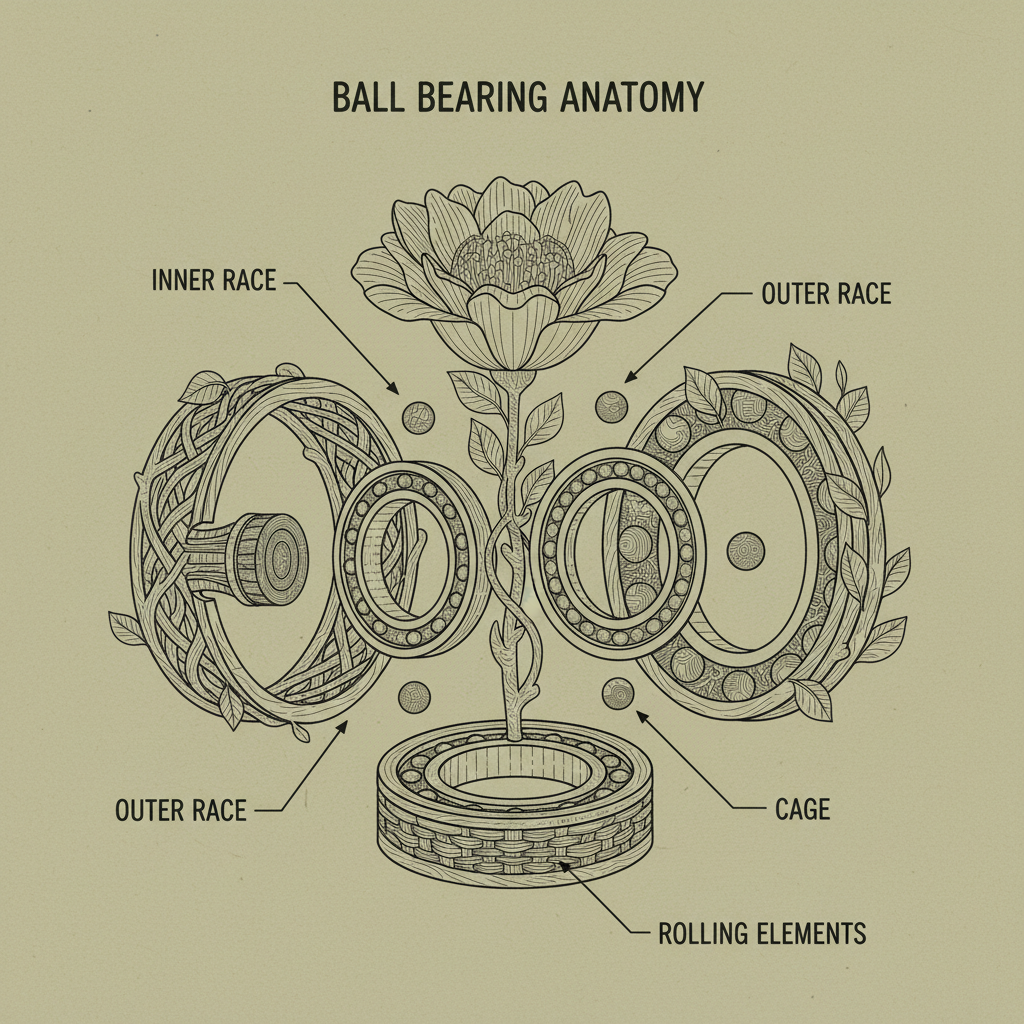
From a practical perspective, the internal cage material also plays a role. Steel cages are cost-effective for standard loads, while brass or polyamide cages are selected for higher vibration or temperature stability. While these modifications increase the initial purchase price, they are often necessary to prevent premature failure in specialized machinery.
Precision Grades and Their Financial Impact
Precision is the most direct correlate to price in the bearing industry. A standard P0 grade bearing is sufficient for most general equipment, but high-precision applications require P6 or P5 grades. The price increase associated with higher precision stems from the tighter tolerances required during the finishing process and the higher rejection rates during quality inspection.
Investing in higher precision reduces operational friction and heat generation, which can extend the life of the bearing and the surrounding equipment. For engineers, the decision is whether the marginal increase in the 6208 bearing price is offset by the reduction in energy consumption and maintenance frequency over the product's lifecycle.
Relative Cost Analysis by Application Tier
The following illustrative framework demonstrates the relative cost drivers based on the application tier. As the requirements shift from basic machinery to high-performance industrial equipment, the cost distribution shifts from raw material dominance toward precision and quality assurance overhead.
This conceptual comparison shows that while raw materials represent a baseline cost, the "Quality & Precision" factor grows exponentially as the application moves toward specialized industrial use. This explains why two bearings with the same 6208 dimensions can have vastly different market prices.
Hidden Costs of Low-Price Bearing Procurement
Procuring 6208 bearings based solely on the lowest available price often introduces significant hidden costs. Low-cost bearings may suffer from inconsistent heat treatment or poor surface finish, leading to accelerated wear and unexpected machine failure. The cost of a single hour of unplanned production downtime typically far exceeds the savings gained from a cheaper bearing.
Additionally, inferior bearings often exhibit higher noise levels and vibration, which can damage other connected components like shafts and housings. A holistic cost analysis must include the cost of labor for replacement, the cost of lost production, and the risk of collateral damage to the machinery.
Supplier Evaluation Criteria for B2B Buyers
To ensure value for money, buyers should evaluate suppliers based on technical capability rather than just the price list. A professional manufacturer, such as Xingtai Weizi Bearing Co., Ltd, provides value through ISO9001 conformance and the ability to offer special design and manufacturing services. This ensures that the bearing is optimized for the specific load and speed requirements of the client's machinery.
Key evaluation metrics include the supplier's quality control process, their capacity for consistent lead times, and their technical support for application-specific mounting. A supplier that provides comprehensive technical data and certification is generally a safer long-term partner than a trading company offering the lowest price without technical accountability.
Procurement Decision Matrix for 6208 Bearings
Depending on the operational environment, different procurement strategies should be adopted. The following matrix categorizes the 6208 bearing options based on the critical needs of the application to guide the final purchasing decision.
| Option Tier | Key Priority | Best Use Case | Cost Impact |
|---|---|---|---|
| Standard Grade | Low Initial Cost | Low-load general equipment | Baseline Price |
| High Precision | Operational Stability | High-speed machinery | Moderate Increase |
| Premium Material | Corrosion Resistance | Chemical/Food Processing | Significant Increase |
| Custom Design | Specific Fitment | Specialized OEM parts | Variable (High) |
| Bulk Commodity | Unit Cost Reduction | Mass-market consumables | Lowest per-unit |
| Certified ISO | Risk Mitigation | Critical infrastructure | Value-Added Price |
The optimal choice depends on the criticality of the machine. For non-critical components, a standard grade may suffice, but for core drives, the investment in high-precision or certified options is the most economical choice over the full lifecycle.
Frequently Asked Questions
The primary cause of price volatility is the fluctuating cost of high-carbon chromium steel and energy costs associated with heat treatment and precision grinding.
Not necessarily; a high-precision bearing used in a low-precision housing may fail prematurely. Life is determined by the match between bearing specifications and application requirements.
Large volumes reduce the impact of machine setup and administrative costs, allowing manufacturers to offer tiered discounts for bulk procurement.
Certifications like ISO9001 provide a verifiable baseline of quality management, which is often more reliable than brand name alone when evaluating technical suitability.
Stainless steel variants are typically significantly more expensive due to the higher cost of the alloy and the specialized machining processes required.
Request a material test report and a dimension inspection certificate from the manufacturer to verify the grade and tolerance of the batch.
Conclusion
Understanding the 6208 bearing price requires a shift from focusing on the initial purchase cost to analyzing the total operational value. By considering material quality, precision grades, and supplier certifications, procurement professionals can avoid the hidden costs of premature failure and maximize the efficiency of their machinery.
For those seeking a balance of high quality and technical reliability, reviewing the available product information at www.weizibearing.com can help in selecting the right bearing configuration for specific industrial needs.


 English
 Afrikaans
 Albanian
 Amharic
 Arabic
 Armenian
 Azerbaijani
 Basque
 Belarusian
 Bengali
 Bosnian
 Bulgarian
 Catalan
 Cebuano
 Corsican
 Croatian
 Czech
 Danish
 Dutch
 Esperanto
 Estonian
 Finnish
 French
 Frisian
 Galician
 Georgian
 German
 Greek
 Gujarati
 Haitian Creole
 Hausa
 Hawaiian
 Hebrew
 Hindi
 Miao
 Hungarian
 Icelandic
 Igbo
 Indonesian
 Irish
 Italian
 Japanese
 Javanese
 Kannada
 Kazakh
 Khmer
 Rwandese
 Korean
 Kurdish
 Kyrgyz
 Lao
 Latin
 Latvian
 Lithuanian
 Luxembourgish
 Macedonian
 Malgashi
 Malay
 Malayalam
 Maltese
 Maori
 Marathi
 Mongolian
 Myanmar
 Nepali
 Norwegian
 Norwegian
 Occitan
 Pashto
 Persian
 Polish
 Portuguese
 Punjabi
 Romanian
 Russian
 Samoan
 Scottish Gaelic
 Serbian
 Sesotho
 Shona
 Sindhi
 Sinhala
 Slovak
 Slovenian
 Somali
 Spanish
 Sundanese
 Swahili
 Swedish
 Tagalog
 Tajik
 Tamil
 Tatar
 Telugu
 Thai
 Turkish
 Turkmen
 Ukrainian
 Urdu
 Uighur
 Uzbek
 Vietnamese
 Welsh
 Bantu
 Yiddish
 Yoruba
 Zulu