
Deep Groove Ball Bearing Guide and 6004 zz bearing price
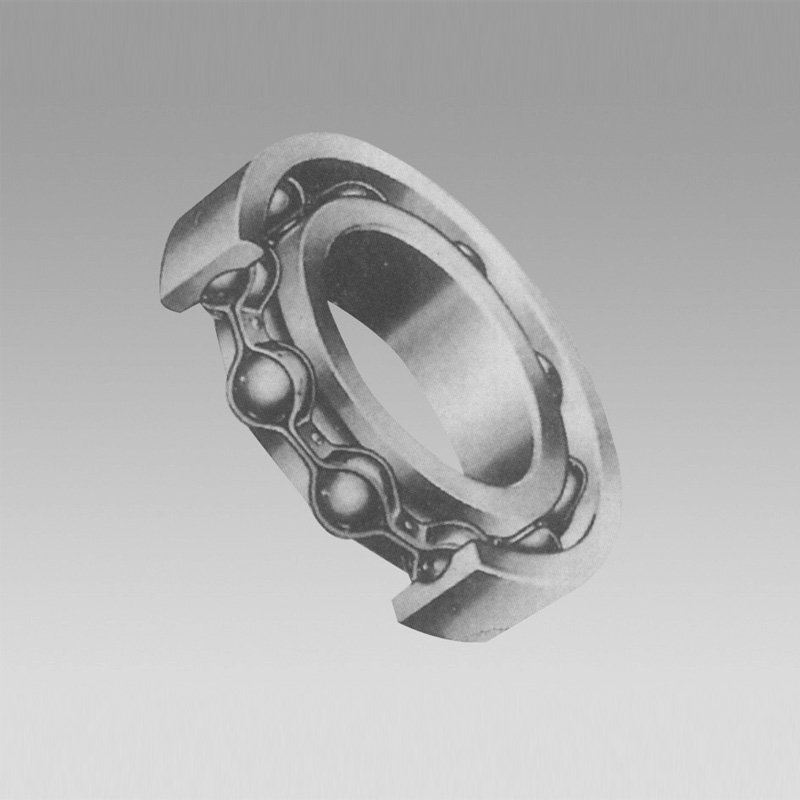
When sourcing components for precision machinery, the balance between load capacity and rotational speed often determines the operational lifespan of the equipment. For procurement managers and engineers, understanding the technical nuances of shielded deep groove ball bearings is essential to avoiding premature failure and optimizing maintenance cycles. These components are engineered to handle both radial and axial loads, making them versatile for everything from electric motors to automotive transmissions.
Selecting a bearing based solely on a 6004 zz bearing price without considering the contact angle or cage material can lead to significant efficiency losses. Whether you require a standard steel plate stamped cage for general industrial use or a high-precision polyamide cage for high-speed rotation, the choice impacts the thermal stability and noise levels of your system. This guide explores the engineering logic and procurement considerations for these critical mechanical elements.

Technical Architecture and Load Distribution in Deep Groove Bearings
The structural integrity of these bearings allows them to withstand complex loading scenarios. Specifically, they are designed to support radial loads and axial loads in one direction. A critical technical variable is the contact angle between the ball and the rings; typical angles of 15, 25, 30, or 40 degrees are utilized. Engineering logic dictates that a larger contact angle increases the bearing's load-carrying capacity, whereas a smaller angle is more favorable for applications requiring high-speed rotation.
Cage selection further differentiates performance. Standard industrial applications typically employ steel plate stamped cages due to their robustness and cost-effectiveness. However, in high-precision environments—particularly those where contact angles are kept below 30 degrees—polyamide formed cages are preferred to reduce friction and heat generation during rapid cycling. Proper alignment and internal clearance adjustment before installation are mandatory to ensure the bearing operates within its designed thermal and mechanical limits.

Advanced Variants: Four-Point Contact and Double Row Thrust Structures
For more demanding axial requirements, specialized structures like the four-point contact ball bearing are employed. This design essentially splits the inner ring into two parts on a vertical plane relative to the central axis. This configuration allows the bearing to withstand axial loads in both directions while maintaining a compact radial footprint. These often utilize copper alloy cutting cages to enhance stability under heavy thrust loads.
Similarly, the double row centripetal thrust bearing integrates the outer rings of two single row bearings into one unit. This integrated structure provides a superior thrust load capacity in two directions, making it ideal for vertical shafts and heavy-duty pivots. When selecting between these and standard deep groove models, engineers must evaluate the ratio of radial to axial force to prevent premature wear on the raceways.
Application Scenarios and Operational Integration
In practical industrial environments, angular contact ball bearings are often deployed in duplex arrangements. Because these bearings produce an additional axial thrust when carrying radial loads, pairing them allows for the cancellation of these forces or the creation of a preloaded system. Preloading increases the stiffness of the spindle, which is critical for CNC machinery and high-precision grinding equipment where any micron-level deviation can result in scrapped parts.
The operational environment also dictates the lubrication strategy. Grease lubrication is typically used for sealed units (ZZ) to prevent contaminant ingress and eliminate the need for external oiling systems. In contrast, oil lubrication is reserved for high-temperature or extreme-speed applications where heat dissipation is the primary concern. Matching the bearing's limiting speed (RPM) to the actual motor output is the first step in ensuring a reliable service life.
Technical Specification Comparison for Industrial Series
| Bearing Model | Bore/OD (mm) | Dynamic Load (C) | Limiting Speed (Oil) |
|---|---|---|---|
| 7312ACM | 60 / 130 | 93.6 kN | 6300 rpm |
| 7315CJ | 75 / 160 | 146 kN | 5000 rpm |
| 7318ACM | 90 / 190 | 168 kN | 4300 rpm |
| 7322B | 110 / 240 | 220 kN | 3000 rpm |
| 7412ACM | 60 / 150 | 131 kN | 5600 rpm |
Procurement Evaluation and Quality Assurance Standards
When evaluating a supplier, procurement professionals must look beyond the 6004 zz bearing price and examine the manufacturing standards. Conformity with ISO9001 is the baseline for ensuring consistent dimensional tolerances and material purity. In the bearing industry, the quality of the raw steel and the precision of the heat treatment process directly correlate to the fatigue life of the component. Any deviation in the hardness of the raceways can lead to premature spalling or pitting.
Customization capabilities are also a key differentiator. High-tier manufacturers offer special design services to adjust internal clearances or modify cage materials for specific corrosive environments. For OEM buyers, the ability to source bearings that match exact technical drawings while maintaining cost efficiency is paramount. Verifying the supplier's export experience and logistics capability ensures that lead times are minimized and customs regulations are handled professionally.
Future Trends in Bearing Design and Material Science
The industry is currently shifting toward "smart" bearings and advanced hybrid materials. Ceramic balls are increasingly used in high-speed applications to reduce centrifugal force and eliminate the need for lubrication in vacuum environments. Furthermore, the integration of sensors within the bearing housing allows for real-time condition monitoring, enabling predictive maintenance rather than scheduled replacements.
Sustainability is also driving a move toward biodegradable lubricants and more energy-efficient manufacturing processes. As machinery operates at higher speeds and under more extreme loads, the demand for specialized coatings (such as DLC - Diamond Like Carbon) is growing. These coatings reduce friction and wear, extending the operational window of the bearing and reducing the overall total cost of ownership for the end-user.
Frequently Asked Technical and Procurement Questions
What is the difference between ZZ and open bearings?
ZZ bearings feature metal shields on both sides to prevent dust and contaminants from entering the raceway while retaining grease. Open bearings have no shields, requiring an external lubrication system and a clean housing environment.
How does the contact angle affect bearing performance?
A larger contact angle increases the bearing's ability to handle axial loads but reduces its maximum speed capability. A smaller contact angle is better suited for high-speed rotation with lower axial requirements.
When should I choose a polyamide cage over a steel cage?
Polyamide cages are recommended for high-precision and high-speed applications where weight reduction and friction minimization are critical, provided the operating temperature remains within the polymer's limits.
What are the risks of improper internal clearance adjustment?
Too little clearance can lead to overheating and seizure as the bearing expands during operation. Too much clearance can cause vibration, noise, and reduced precision in the shaft's movement.
Can four-point contact bearings replace double-row bearings?
In many cases, yes. Four-point contact bearings can handle axial loads in both directions while taking up less radial space, although they may have different radial load limits compared to double-row structures.
What factors most influence the long-term price of bearing procurement?
While the initial unit cost is important, the total cost is influenced by the service life, the frequency of lubrication, and the downtime associated with replacement. High-quality ISO9001 certified bearings generally offer a lower TCO.
Technical References and Industry Standards
- ISO Standards for Rolling Bearings
- Industrial Bearing Load Calculation Guides
- Global Bearing Manufacturing Specifications
- Principles of Radial and Axial Load Distribution
For enterprises seeking reliable bearing solutions, the focus must remain on the synergy between technical specifications and application requirements. Xingtai Weizi Bearing Co., Ltd. provides professional manufacturing and custom design services to ensure your machinery operates at peak efficiency.
Industry Insights and Related Guides


 English
 Afrikaans
 Albanian
 Amharic
 Arabic
 Armenian
 Azerbaijani
 Basque
 Belarusian
 Bengali
 Bosnian
 Bulgarian
 Catalan
 Cebuano
 Corsican
 Croatian
 Czech
 Danish
 Dutch
 Esperanto
 Estonian
 Finnish
 French
 Frisian
 Galician
 Georgian
 German
 Greek
 Gujarati
 Haitian Creole
 Hausa
 Hawaiian
 Hebrew
 Hindi
 Miao
 Hungarian
 Icelandic
 Igbo
 Indonesian
 Irish
 Italian
 Japanese
 Javanese
 Kannada
 Kazakh
 Khmer
 Rwandese
 Korean
 Kurdish
 Kyrgyz
 Lao
 Latin
 Latvian
 Lithuanian
 Luxembourgish
 Macedonian
 Malgashi
 Malay
 Malayalam
 Maltese
 Maori
 Marathi
 Mongolian
 Myanmar
 Nepali
 Norwegian
 Norwegian
 Occitan
 Pashto
 Persian
 Polish
 Portuguese
 Punjabi
 Romanian
 Russian
 Samoan
 Scottish Gaelic
 Serbian
 Sesotho
 Shona
 Sindhi
 Sinhala
 Slovak
 Slovenian
 Somali
 Spanish
 Sundanese
 Swahili
 Swedish
 Tagalog
 Tajik
 Tamil
 Tatar
 Telugu
 Thai
 Turkish
 Turkmen
 Ukrainian
 Urdu
 Uighur
 Uzbek
 Vietnamese
 Welsh
 Bantu
 Yiddish
 Yoruba
 Zulu