The 6307 bearing stands as a cornerstone in the world of mechanical engineering, providing the essential rotational stability and friction reduction required for a vast array of industrial applications. As a deep groove ball bearing, it is engineered to handle both radial and axial loads, making it a versatile choice for engineers who prioritize reliability and precision in high-speed environments. Understanding the nuances of this specific bearing size is critical for maintaining operational efficiency and extending the lifespan of machinery globally.
From a global industrial perspective, the demand for high-quality 6307 bearing units is driven by the continuous evolution of the automotive, aerospace, and manufacturing sectors. These industries rely on ISO-standardized components to ensure interchangeability and consistent performance across international borders. When a bearing fails, it doesn't just stop a machine; it disrupts supply chains and increases operational costs, which is why selecting the correct grade and material for this specific bearing is a high-stakes decision.
In today's competitive market, the challenge lies in balancing cost-efficiency with extreme durability. Many enterprises struggle with premature bearing failure due to improper lubrication or incorrect load calculations. By focusing on the technical specifications and application-specific advantages of the 6307 bearing, operators can transition from reactive maintenance to a proactive strategy, ensuring that their equipment runs smoother, quieter, and longer.
Global Industrial Relevance of 6307 Bearing
The global relevance of the 6307 bearing cannot be overstated, as it serves as a fundamental building block for machinery across six continents. Following ISO and DIN standards, this bearing ensures that a motor produced in Germany can be maintained with parts sourced from China or the US, facilitating a seamless global trade of industrial machinery. The standardization of the 6307 series allows for rapid scaling of production lines and reduces the complexity of inventory management for multinational corporations.
Beyond mere standardization, the 6307 bearing addresses the critical challenge of energy loss. In large-scale industrial zones, where thousands of rotating shafts operate simultaneously, even a slight increase in friction can lead to massive energy waste. By implementing high-precision 6307 bearings, industries are able to align with global sustainability goals, reducing the carbon footprint of manufacturing by optimizing the mechanical efficiency of every single rotating joint.
Technical Definition and Core Meaning
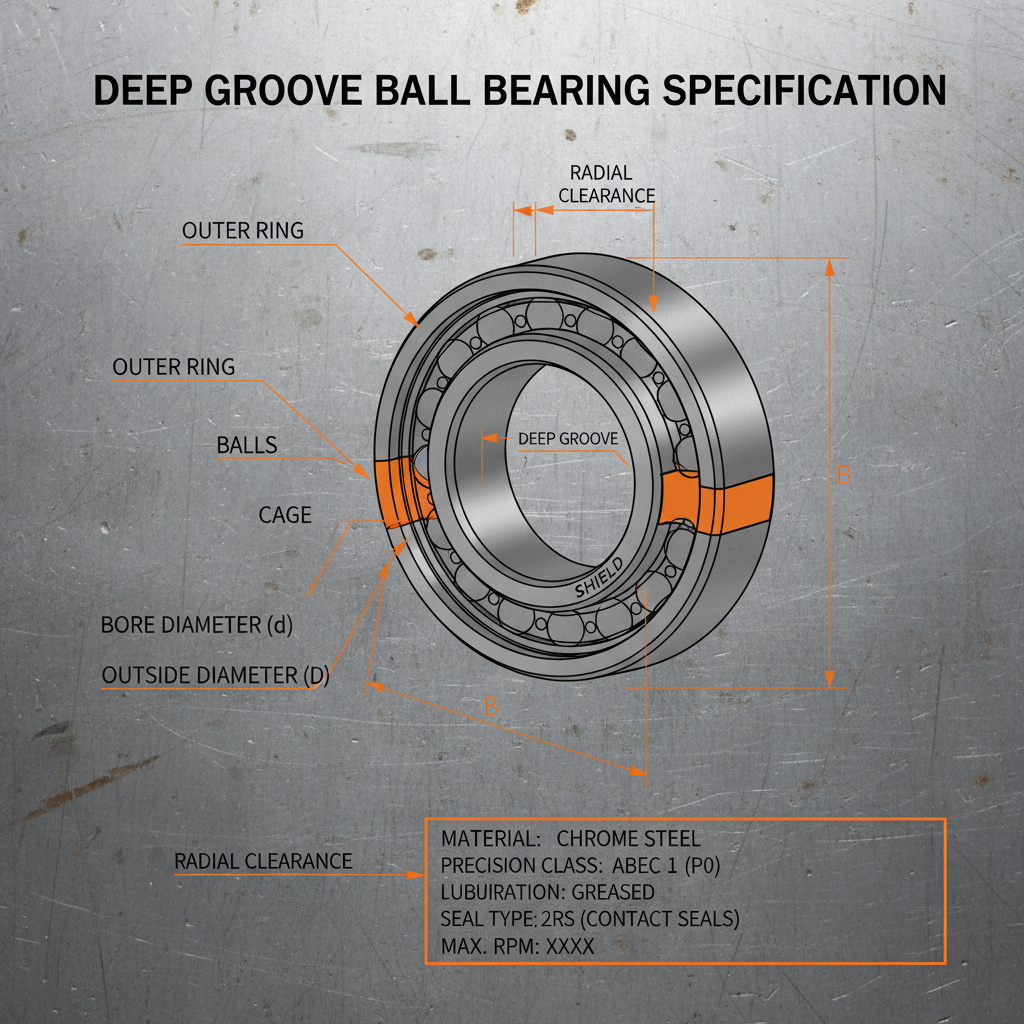
In simple technical terms, a 6307 bearing is a deep groove ball bearing characterized by its specific dimensions—typically featuring a 35mm bore diameter. It consists of an inner ring, an outer ring, a set of rolling balls, and a cage that keeps the balls evenly spaced. Its "deep groove" design allows it to support significant radial loads while also managing moderate axial loads in both directions, making it a "jack-of-all-trades" in the bearing world.
Connecting this technical definition to modern industry, the 6307 bearing represents the intersection of precision metallurgy and fluid dynamics. In humanitarian contexts, such as the deployment of water purification systems in remote regions or the maintenance of agricultural machinery in developing nations, the availability of a reliable 6307 bearing is often the difference between a functioning utility and a complete system failure. It is the invisible component that ensures the "heartbeat" of a machine remains steady.
Furthermore, the meaning of the "6307" designation provides a shorthand for engineers to immediately understand the bearing's load capacity and speed limits. This alphanumeric coding system removes ambiguity from the procurement process, ensuring that the mechanical integrity of critical infrastructure—from power plant turbines to conveyor belts—is never compromised by the installation of an incorrectly sized component.
Key Performance Factors of 6307 Bearing
Durability is the primary benchmark for any 6307 bearing. The use of high-carbon chromium steel (GCr15) ensures that the raceways can withstand immense pressure without deformation. This material choice, combined with advanced heat treatment processes, allows the bearing to maintain its structural integrity even under the grueling conditions of 24/7 industrial operation.
Load Scalability is another core factor, as the 6307 bearing is designed to transition smoothly between different load profiles. Whether it is handling the steady radial force of a rotating shaft or the intermittent axial thrust of a reciprocating part, the internal geometry is optimized to distribute stress evenly across the rolling elements, preventing localized wear and "pitting."
Cost Efficiency is achieved through the balance of performance and mass-producibility. Because the 6307 bearing is a standard size, the economies of scale bring down the unit price without sacrificing the precision required for high-speed rotation. This allows companies to implement rigorous preventive maintenance schedules—replacing bearings before they fail—without incurring prohibitive costs.
Global Applications and Real-World Use Cases
The versatility of the 6307 bearing allows it to be deployed in diverse environments, from the sterile cleanrooms of pharmaceutical plants to the dusty corridors of mining operations. In the automotive sector, these bearings are frequently found in transmission systems and alternator assemblies, where they must endure high RPMs and fluctuating temperatures. In Southeast Asia's textile hubs, they power the high-speed spindles of weaving machines, ensuring fabric consistency.
In more challenging contexts, such as remote industrial zones in Sub-Saharan Africa or post-disaster relief operations where portable generators are deployed, the 6307 bearing's reliability is paramount. These generators often run in suboptimal conditions with limited lubrication; the robustness of a high-quality 6307 bearing ensures that power remains available for hospitals and communication centers when every minute counts.
Performance Metrics of 6307 Bearing Variations
Long-Term Value and Strategic Advantages
Investing in premium 6307 bearing components yields tangible long-term value by drastically reducing the Total Cost of Ownership (TCO). While lower-grade bearings may offer an initial saving, the hidden costs of unplanned downtime, labor for frequent replacements, and the risk of catastrophic machine failure far outweigh the initial price difference. High-precision bearings ensure that vibration levels are kept to a minimum, which protects other connected components like seals and gears.
Beyond the financial logic, there is an emotional and strategic angle: trust and safety. In industries like heavy machinery or elevator systems, a bearing failure can be a safety hazard. By utilizing a certified 6307 bearing, engineers provide a guarantee of stability and reliability. This fosters innovation, as designers can push the limits of machine speed and load, knowing that the foundational support system—the bearing—is capable of handling the stress.
Future Trends in Bearing Innovation
The future of the 6307 bearing is being reshaped by the digital transformation of industry, often referred to as Industry 4.0. We are seeing the emergence of "smart bearings" where sensors are integrated into the outer ring of the 6307 series to monitor vibration and temperature in real-time. This allows for predictive maintenance, where the bearing effectively "tells" the operator when it is nearing the end of its life cycle, eliminating the guesswork of scheduled maintenance.
Material science is also evolving, with a strong push toward green energy and sustainability. New coating technologies, such as Diamond-Like Carbon (DLC), are being applied to 6307 bearings to reduce friction even further, potentially eliminating the need for oil-based lubricants in some applications. This not only reduces environmental pollution but also allows bearings to operate in vacuum or high-contamination environments where traditional grease would fail.
Automation and AI-driven manufacturing are also refining the production of these components. Using AI to optimize the heat treatment and grinding process, manufacturers can produce 6307 bearings with tighter tolerances than ever before. This increase in precision leads to quieter operation and higher energy efficiency, aligning with global mandates for greener industrial production.
Challenges and Expert Solutions for Implementation
One of the most common challenges in implementing the 6307 bearing is improper installation. Many technicians rely on manual hammering, which can cause "brinelling"—small indentations in the raceway that lead to premature noise and failure. The expert solution is the adoption of induction heaters or hydraulic press tools, which ensure the bearing is expanded and seated perfectly without applying direct force to the rolling elements.
Lubrication mismatch is another persistent issue. Using a grease that is too viscous for high-speed 6307 bearings can cause overheating, while too thin a lubricant fails to provide a sufficient film for heavy loads. To overcome this, we recommend a strict lubrication matrix based on the actual operating temperature and RPM of the machinery, ensuring the lubricant's chemistry is compatible with the bearing's seal material.
Finally, contamination remains a primary enemy of bearing longevity. In dusty or humid environments, standard seals may not be enough. The solution lies in upgrading to reinforced seals or implementing external labyrinth seals that protect the 6307 bearing from ingress. Combining these technical solutions with a structured monitoring program transforms the bearing from a consumable part into a strategic asset.
Analysis of 6307 Bearing Implementation Strategies
| Implementation Factor |
Common Challenge |
Expert Solution |
Impact Score (1-10) |
| Installation Method |
Mechanical Impact/Brinelling |
Induction Heating |
9 |
| Lubrication Choice |
Viscosity Mismatch |
Application-Specific Grease |
8 |
| Environmental Protection |
Dust and Moisture Ingress |
Labyrinth Seal Integration |
10 |
| Maintenance Cycle |
Reactive Failure Replacement |
Predictive Vibration Analysis |
9 |
| Material Selection |
Corrosion in Humid Zones |
Stainless Steel 6307 Upgrade |
7 |
| Load Management |
Excessive Axial Thrust |
Hybrid Bearing Configuration |
8 |
FAQS
A standard 6307 bearing typically has a bore diameter of 35mm, an outer diameter of 72mm, and a width of 19mm. These dimensions are standardized globally to ensure that they fit into various housing units and shafts across different brands of machinery, provided they adhere to ISO standards.
Yes, the 6307 bearing is specifically designed for high-speed rotation. However, the maximum permissible speed depends heavily on the type of cage (steel vs. nylon) and the lubrication method used. For maximum speed, high-quality synthetic oils and precision-ground raceways are recommended to prevent overheating.
The most common signs of failure include an increase in operating noise (whining or grinding), elevated housing temperatures, and increased vibration levels. Using a vibration analyzer can help detect early-stage fatigue (pitting) long before the bearing actually seizes, allowing for planned replacement.
While both share the same 35mm bore, the 6307 is part of a "medium" series, meaning it has a larger outer diameter and wider cross-section than the 6207 "light" series. Consequently, the 6307 bearing has a significantly higher load-carrying capacity, making it suitable for heavier industrial applications.
Choose "Open" bearings for applications with a constant oil bath. Choose "ZZ" (metal shields) for protection against coarse dust in dry environments. For the best protection against moisture and fine particles, "2RS" (rubber seals) are the best choice, although they slightly increase friction and reduce maximum speed.
Standard chrome steel bearings are not suitable due to corrosion risks. For food-grade applications, you should use a stainless steel 6307 bearing paired with food-grade H1 lubricant. This prevents contamination and ensures the bearing can withstand the frequent wash-downs common in food processing plants.
Conclusion
The 6307 bearing is far more than a simple mechanical component; it is a critical engine of industrial productivity. By combining standardization with high-performance engineering, it enables everything from the smallest electric motor to the largest assembly line to function with precision and efficiency. We have explored its technical specifications, its role in global supply chains, and the strategic importance of correct installation and maintenance to ensure long-term reliability.
Looking ahead, the integration of smart sensors and sustainable materials will continue to elevate the 6307 series, turning a passive component into an active data point for industrial optimization. For engineers and procurement managers, the key to success lies in prioritizing quality over initial cost and adopting a predictive maintenance mindset. To ensure your operations are powered by the most reliable components in the industry, visit our website: www.weizibearing.com.