
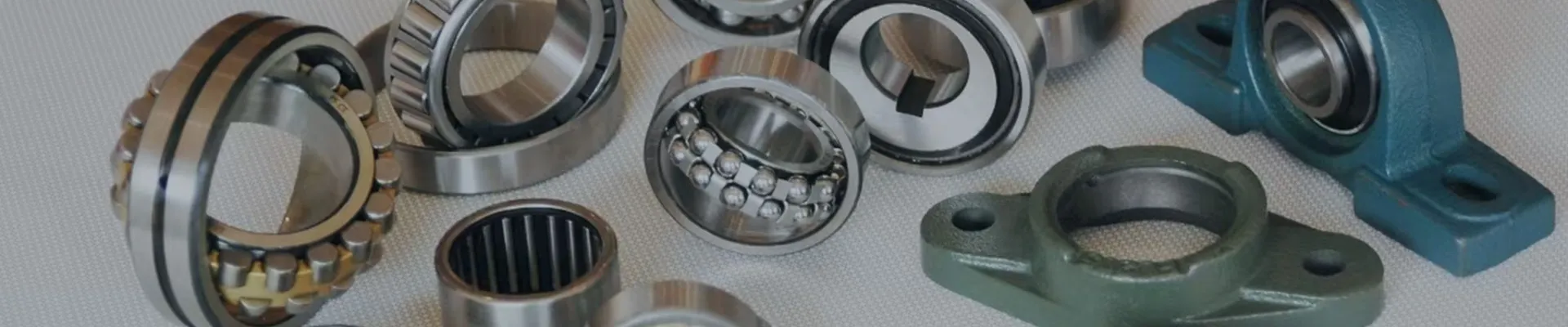

Deep groove ball bearings represent the most versatile and widely utilized structure in the rolling bearing industry. Engineered with a raceway on both the inner and outer rings featuring a radius arc cross-section slightly larger than the rolling balls, these bearings are optimized for high-performance mechanical applications. They are uniquely capable of supporting substantial radial loads while simultaneously managing axial loads from both directions, making them an indispensable component in modern machinery.
Designed for efficiency, our deep groove ball bearings exhibit exceptionally low friction torque, which is critical for applications demanding high-speed rotation, minimal noise, and low vibration. To meet diverse environmental requirements, these bearings are available in multiple configurations, including open types, steel plate dust covers, and rubber sealing rings. Whether utilized in precision instruments or heavy-duty industrial equipment, they ensure seamless motion and extended operational longevity.
Detailed Parameters
| Load Capacity | Supports radial and bidirectional axial loads | Rotation Speed | Optimized for high-speed operation |
|---|---|---|---|
| Friction Level | Low friction torque for energy efficiency | Noise Profile | Engineered for low noise and vibration |
| Cage Material | Commonly used steel plate stamped cages | Sealing Options | Rubber seals, steel shields, or open type |
| Standard Series | 6000, 6200, 6300 series available | Special Features | Available with snap ring grooves (N type) |
| Lubrication | Compatible with high-grade grease or oil | Customization | Adjustable radial clearance for heavy axial loads |
Key Advantages
Dual-Load Support
Effortlessly handles both radial and axial loads in two directions for maximum stability.
High-Speed Efficiency
Low friction coefficients allow for higher RPMs with reduced heat generation.
Ultra-Low Noise
Precision raceway engineering ensures silent operation and minimal vibration.
Versatile Sealing
Choose from 2RS rubber seals or ZZ steel shields to protect against contaminants.
Precision Fit
Strict dimensional tolerances ensure a perfect fit for various industrial shafts.
Adaptable Design
Increased radial clearance options allow them to replace high-speed angular contact bearings.
Product Gallery


Management Platforms
Inventory Control
Real-time tracking of all 6000, 6200, and 6300 series bearing stock.
Quality Assurance
Strict inspection of basic load ratings (Cr/Cor) for every batch.
Precision Monitoring
Continuous analysis of limiting speeds to ensure safe operational limits.
Technical Support
Expert guidance on choosing between RS, RZ, and ZZ seals.
Supply Chain Optimization
Streamlined logistics for fast delivery of machinery bearings worldwide.
Lifecycle Management
Maintenance scheduling based on grease and oil lubrication cycles.
Investment Return Comparison
| Performance Metric | Standard Bearings | Our Premium Series |
|---|---|---|
| Operational Lifespan | Moderate | Extended (High Durability) |
| Noise Levels | Standard | Ultra-Low / Silent |
| Friction Loss | Normal | Minimized for Energy Saving |
| Maintenance Frequency | Frequent | Reduced via Advanced Seals |
| Load Stability | Basic | Superior Radial/Axial Balance |
Frequently Asked Questions
They are used in a wide range of machinery due to their ability to handle both radial and axial loads, especially in electric motors, automotive components, and household appliances.
ZZ indicates shields on both sides made of steel, while 2RS indicates rubber seals on both sides. Rubber seals provide better protection against dust and moisture.
Yes, if the radial clearance is increased, they can be used to carry heavier axial loads and potentially replace high-speed angular contact bearings in specific applications.
Bearings lubricated with oil typically have higher limiting speeds compared to those lubricated with grease, as oil reduces heat buildup more effectively at high RPMs.
The 'N' suffix indicates that the bearing is equipped with a snap ring groove on the outer ring for easier mounting and positioning.
Low friction torque reduces energy consumption, prevents overheating, and extends the service life of the bearing and the overall machinery system.
 English
 Afrikaans
 Albanian
 Amharic
 Arabic
 Armenian
 Azerbaijani
 Basque
 Belarusian
 Bengali
 Bosnian
 Bulgarian
 Catalan
 Cebuano
 Corsican
 Croatian
 Czech
 Danish
 Dutch
 Esperanto
 Estonian
 Finnish
 French
 Frisian
 Galician
 Georgian
 German
 Greek
 Gujarati
 Haitian Creole
 Hausa
 Hawaiian
 Hebrew
 Hindi
 Miao
 Hungarian
 Icelandic
 Igbo
 Indonesian
 Irish
 Italian
 Japanese
 Javanese
 Kannada
 Kazakh
 Khmer
 Rwandese
 Korean
 Kurdish
 Kyrgyz
 Lao
 Latin
 Latvian
 Lithuanian
 Luxembourgish
 Macedonian
 Malgashi
 Malay
 Malayalam
 Maltese
 Maori
 Marathi
 Mongolian
 Myanmar
 Nepali
 Norwegian
 Norwegian
 Occitan
 Pashto
 Persian
 Polish
 Portuguese
 Punjabi
 Romanian
 Russian
 Samoan
 Scottish Gaelic
 Serbian
 Sesotho
 Shona
 Sindhi
 Sinhala
 Slovak
 Slovenian
 Somali
 Spanish
 Sundanese
 Swahili
 Swedish
 Tagalog
 Tajik
 Tamil
 Tatar
 Telugu
 Thai
 Turkish
 Turkmen
 Ukrainian
 Urdu
 Uighur
 Uzbek
 Vietnamese
 Welsh
 Bantu
 Yiddish
 Yoruba
 Zulu